

George Weil Blog & FAQs
Welcome to the George Weil Blog FAQs which includes information about the art and craft products sold on this website. There are project ideas, photographs of items created by our customers, product reviews, and step-by-step instructions. See also our USEFUL LINKS page which includes a listing of websites offering information about the products sold on our website, training resources and Guilds.
If there is anything you would like to see included here or if you would like to contribute an item, please email graphics@georgeweil.com
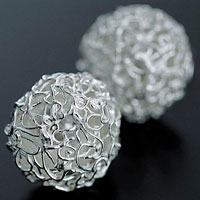
Filigree Balls using Art Clay Silver Clay Syringe
These stunning silver balls have been made using cork clay as a core. The cork clay can be moulded to any shape, allowed to dry and then used as a former or core for the Art Clay Silver clay. The...
CONTINUE READING >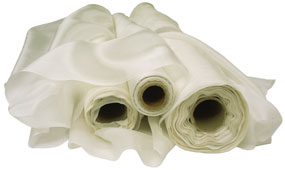
Silk Fabrics
Luxurious, light transmitting silk fabrics give vibrant results when dyed or painted with acid dyes or decorated with silk paints. What is a Momme (mm)? Pronounced “mom-ee”, a momme (mm) is a traditional East Asian unit used to measure the weight...
CONTINUE READING >
Screen Printing with Selectasine – How to Mix Your Own Screen Printing Inks
Screen Printing with Selectasine Eco pigments and Binders is a versatile and economical method for creating high-quality screen printing inks. By combining Selectasine ECO pigments with Selectasine binders, you can easily mix your own screen printing colours for printing onto...
CONTINUE READING >
Screen Printing on Fabric with Dyes
There are a range of printing inks which have been developed specifically for printing on silk screens, including the Selectasine Screen Printing System. It is also possible to use commercial dyes combined with a thickener, making the consistency similar to...
CONTINUE READING >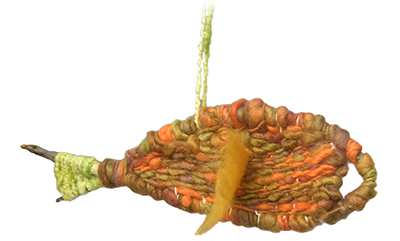
Tapestry Woven Fish
We had great fun making this fish at an experimental tapestry weaving workshop. You can use any flexible materials to weave, so exploring the craft doesn’t have to be expensive. For this project we used lengths of left over yarns...
CONTINUE READING >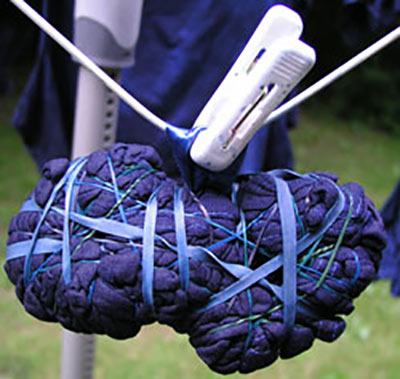
Shibori & Tie Dyeing Fabrics
Shibori, the ancient Japanese technique of fabric folding and dyeing has been brought right up to date. Traditionally indigo was used to create patterning. However, using modern dyes, discharge agents and fabrics you can easily develop complex patterns. Tying and...
CONTINUE READING >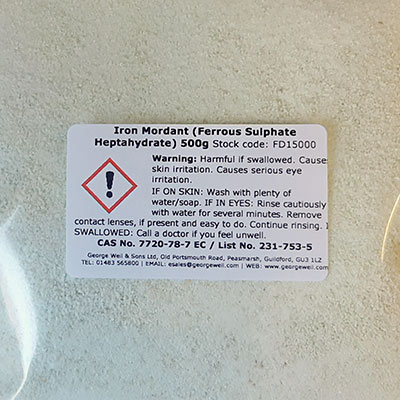
Patterning Fabric with Rust
There are a number of ways to create rust patterns on cotton and silk fabric and here is a simple controlled method. Natural fibres take the rust colours better than synthetic fibres and fabrics should be free from oils or...
CONTINUE READING >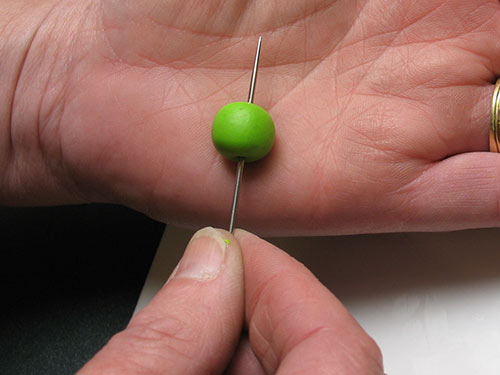
How to make a Round Bead from Polymer Clay
with Sue Heaser Making your own beads with polymer clay is great fun to do and after a little practice, you will be able to make beads of all shapes and sizes. It is best to start with a simple...
CONTINUE READING >
How to Degum Reeled Silk
Fibrecrafts Reeled Silk is the finest quality filament silk, containing 25% sericin and suitable for silk papermaking or couching. After degumming, the silk fibre can be dyed and spun to a lustrous yarn. The Silk Throwsters Waste, Carded Cocoon Strippings...
CONTINUE READING >
Reeds for your Weaving Loom
Selecting a Reed Collecting reeds is often found in the committed weaver. Although it is possible to sley a reed with a wide mix of ends through adjacent dents, to achieve the desired pattern of ends across the width, the...
CONTINUE READING >
Handmade Papermaking with Pulp
Simple Instructions for Papermaking Use handmade paper for artwork, card making, paper crafts or as a surface for stitch. Handmade paper can be made from pulp, linters, recycled paper and plant materials. The materials are beaten and combined with water...
CONTINUE READING >
Using Procion MX Dyes on Wool
Although Acid dyes are usually recommended for protein fibres, Procion MX fibre-reactive dyes can also be used successfully on wool and other protein fibres. Unlike cotton, wool contains amino groups that react with fibre-reactive dyes under acidic conditions. Although the...
CONTINUE READING >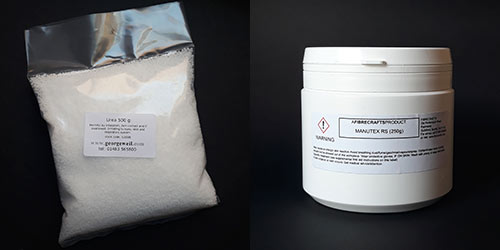
Printing with Procion MX Dyes
Procion MX dyes are suitable for printing on cotton, linen and viscose rayon. They have excellent colour fastness, provided they are set using soda ash. The results are less vibrant when used on silk fabric and we recommend you use...
CONTINUE READING >
Printing and Painting on Silk using Acid Dyes
It is possible to achieve excellent levels of colour fastness when colouring the silk with Acid dyes, making the dyed silk fabric ideal for clothes, linings, and wall hangings. The silk scarf below was painted by Katherine Barney using the...
CONTINUE READING >
Polymer Clay Christmas Trees using an Extruder
Polymer clay is very easy to shape and smooth into shape and using an extruder allows you to create lengths of consistently shaped clay which can be coiled, pressed together to create complex multi-coloured canes, woven or plaited. These Christmas...
CONTINUE READING >
Hand Spun, Knitted Hat
Karen Malledent sent us this great photo. ‘Thought you might like a photo of my daughter wearing one of my creations using your merino and blue faced Leicester (the one I dyed yellow using your acid dyes). I call this...
CONTINUE READING >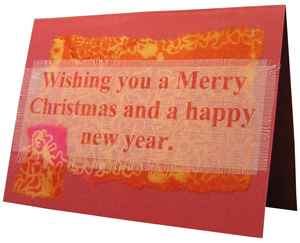
Printed Silk Organza Greetings Card
These paper-backed Organza fabric sheets can be used for printing on inkjet printers and copiers. They can be used to build up layers of printed text and photographs giving interest and depth in cardmaking, scrapbooking, montage, patchwork and 3d embroidery...
CONTINUE READING >
Needle Felted Animals by Coralie and Phil Miles
We love these needle felted animals created by Coralie and Phil Miles. This is their first attempt and we can’t wait to see how their skills progress! Coralie used to work here with us before she retired. She is a...
CONTINUE READING >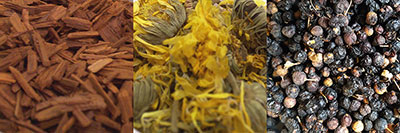
Natural Dyes – Mineral, Substantive or Adjective
What are Natural Dyes? Natural dyes are derived from naturally occurring sources such as plants, minerals and invertebrates and used to add colour to textiles and paper. The dyes tend to fall into one of three types, mineral, substantive or...
CONTINUE READING >
Handmade Mulberry Paper
The Papershed handmade Mulberry paper is made from the bast (the long strong fibres from the inner bark) of the Mulberry tree. The fibres (also known as Kozo) are stripped and beaten to separate out the longer, tougher fibres for...
CONTINUE READING >