

George Weil Blog & FAQs
Welcome to the George Weil Blog FAQs which includes information about the art and craft products sold on this website. There are project ideas, photographs of items created by our customers, product reviews, and step-by-step instructions. See also our USEFUL LINKS page which includes a listing of websites offering information about the products sold on our website, training resources and Guilds.
If there is anything you would like to see included here or if you would like to contribute an item, please email graphics@georgeweil.com

Felt Making Using Felting Needles
Felt is created by agitating wool fibres until they mat together to form a non-woven fabric. The fibres can be laid flat on a surface or moulded around a former such as a hatshaper, cardboard or even a ball. Most...
CONTINUE READING >
Making Felted Fabric and Felt Balls by Hand
Felt can be built in many ways using wool fibres as the base. However it is important to make sure that you are using the correct quality of wool fibres. Too coarse a fibre slows felting as fibre below 56’s...
CONTINUE READING >
Photo Emulsion Exposure
A popular method of making stencils for screen printing is to use the Diazo Photo Emulsion. The screen is prepared with the photo emulsion and a negative printed on acetate is placed on the screen before it is exposed to...
CONTINUE READING >
Stencil making with Diazo Sensitised Photo Emulsion
Diazo is a chemical sensitizer that is mixed with a base emulsion to make it light-sensitive. A screen is coated with the photo sensitive emulsion and allowed to dry. The stencil is made by placing a “film positive” (i.e. your...
CONTINUE READING >
Using Deka L Dyes
What are Deka L Dyes and How to Use Them Deka L dyes fall into the category of Direct Dyes. These dyes give quick colour results with a simple process. They are economical to use (compared to the more specialised...
CONTINUE READING >
Cyanotype Printing – How to Make a Cyanotype Blue Print
What is a Cyanotype? Cyanotype Printing is a 19th-century camera-less photographic printing process that produces a distinctive, monochrome, Prussian blue-and-white image. Discovered in 1842 by Sir John Herschel, it is one of the earliest photographic techniques and is famous for...
CONTINUE READING >
Handmade Cotton Paper with Natural Dyestuff Inclusions
These highly textured, robust papers were made using cotton linters on an A6 Mould and Deckle, (a 250g pack will make approximately 50 A6 sheets). Linters contain partially beaten cotton fibres which are formed into dry sheets that resemble blotting paper...
CONTINUE READING >
Cotton Fabrics
The cotton material for Batik work requires a good finish, needs to be reasonably pliable and be able to accept the resist in order to prevent dye penetration. The Bleached Cotton, the Javanese Primissima and the Javanese Prima all meet...
CONTINUE READING >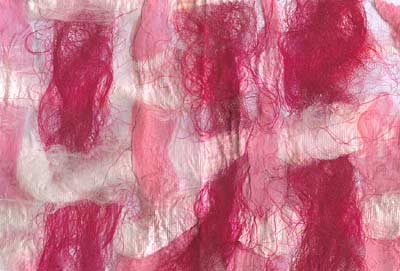
Mixed Media Collage
Woven Silk Fibres A further variation on the silk papermaking method. Ruth Edwards has taken lengths of dyed and undyed silk fibres and woven them prior to applying the CMC paste. Silk Sea This design, by Alison Bate, has been...
CONTINUE READING >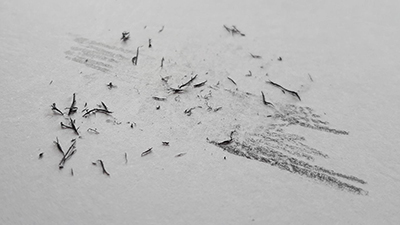
Rubbers and Erasers for Artists
There are a huge range of artists rubbers and erasers available on the market today. Each eraser has unique qualities to suit different situations and art styles. Here is a short overview of some of the types of eraser and...
CONTINUE READING >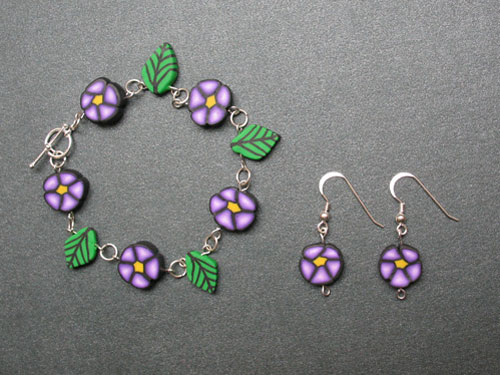
Making Jewellery from Millefiori Canes
with Sue Heaser This pretty jewellery is made using slices from the Millefiori flower cane and slices from the Leaf cane. Materials and Tools You will need a flower cane reduced to about 13mm diameter, a leaf cane reduced to...
CONTINUE READING >
Making a Leaf Shaped Cane from Polymer Clay
with Sue Heaser A simple leaf polymer clay cane will set off your millefiori flowers to perfection. This delightful bracelet was made by threading wire through millefiori flower slices and linking them with wire that has been threaded through leaf...
CONTINUE READING >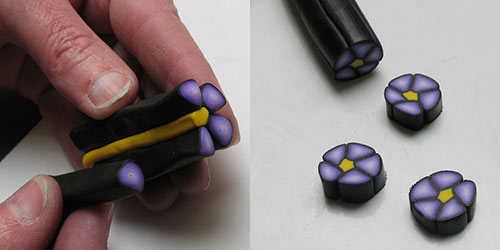
Polymer Clay Millefiori Cane Flower
with Sue Heaser Flower canes are easy to create from polymer clay and make beautiful jewellery. You will need the following materials and tools: Polymer clay: ¼ block each of white, violet and black. Small quantity of golden yellow Roller...
CONTINUE READING >
Steam Fixing Acid Dyes
Silk dyes will produce more vibrant colour results than iron fix silk paints. The dyes penetrate the fibres and are locked within the fabric through the steaming process, ensuring greater wash and light fastness. The results of this process far...
CONTINUE READING >
Discharge Paste Recipe
Formosul or Formasol is the active component of Discharge Paste. Discharge Paste is used for removing areas of colour from dyed natural fabrics such as cotton, silk and viscose. Please note that some Procion MX fibre reactive dyes do not...
CONTINUE READING >
Mordants for Natural Dyeing
What is a Mordant? The use of mordants for natural dyeing (“mordant” derived from the Latin word mordere, meaning “to bite”) has been a staple in textile production since ancient times, dating back thousands of years. A mordant links chemically...
CONTINUE READING >
Mixed Media Modelling
Imagination is all you need, along with findings from around the home plus many of the materials from this web site. Newspaper and wall paper paste make excellent papier m¢ch© as does paper pulp combined with CMC (Methyl Cellulose) paste...
CONTINUE READING >
Handmade Christmas Crackers
Some of the papers used to make these lovely Christmas Crackers are no longer available from this web site but there are alternative papers that will work equally well. The contrasting papers used to decorate the body of the crackers...
CONTINUE READING >
Painted Flower Canvas Bag
You can paint bags, canvas shoes, t-shirts and more using fabric paints and the following technique. If you’re fed up with High Street fashions and can’t find the colours or styles you want, this is a fun way of customising...
CONTINUE READING >
Hand Painted Tulip Canvas Bag
There are a number of ‘bags for life’ being offered at super markets, but if you want to create a unique and personal design, our canvas bag can be painted with fabric paints. How to Paint your own The design...
CONTINUE READING >