


Flyers, Bobbins and Whorls The design and fittings of a spinning wheel have a significant influence on the types of yarn it can produce most easily. This is one reason why many hand spinners own more than one wheel. The working unit on most modern spinning wheels consists of the flyer (the ‘U’-shaped piece), the bobbin […]
Tag Archives: Yarns

21
Oct
Oct
Britain’s native sheep breeds produce an extraordinary variety of wools — from the shimmering longwools of Yorkshire to the soft, springy fleeces of the South Downs. When prepared as tops, each fibre type reveals its true personality. This guide explores how each British wool top spins, what the finished yarn is like, and includes the […]

07
Oct
Oct
What do the weaving terms EPI and PPI mean? Learn how to calculate the correct sett (EPI) and picks per inch (PPI) for weaving yarns. Discover how to balance warp and weft density, choose the right sett for your fibre, and weave fabrics with the perfect drape and structure. Getting the sett (EPI – ends […]

10
Aug
Aug
Common Yarn Count Systems Various methods are used to determine yarn counts. The yarn count is basically a way of defining the thickness of a yarn, and this is done by measuring the length of yarn to a specific weight; the higher the number, the finer the yarn. Most of the yarns on this website […]

25
Sep
Sep
It’s never too late to change direction in life and customer Jo Aylwin is living proof! Before training as a solicitor, Jo had discovered weaving as a student in Norway in 1975. Although in love with the craft, she did not encounter weaving again for another 30 years. The workshop she attended at UCA Farnham […]

31
Jan
Jan
Understanding a little about colour theory can help you to decide which colours to choose for art or craft projects. The success of a project, whether it be woven cloth or a watercolour painting, can be determined by choosing the best colour relationships. Primary Colours The primary colours red, yellow and blue are the only […]

19
Jun
Jun
Prepared Wool Fibres Wool fibres that have been washed and carded into a roving are commonly known as Wool Tops. The fibres are prepared so that the wool tops are consistent in their staple length (the length of the individual “hairs”) and count. The Micron (mic) Count or Bradford count (see more about the classification […]
18
Jun
Jun
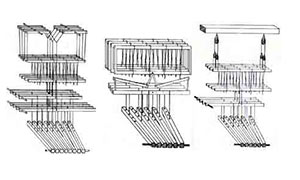
Understanding Weaving Loom Shed The shed is the space between raised and lowered warp threads in which the weft passes through. Floor looms have a range of mechanisms for creating the shed; each has its benefits and disadvantages. The shed shown in the image right demonstrates how the warp is lifted and separated. This small […]
10
Jun
Jun
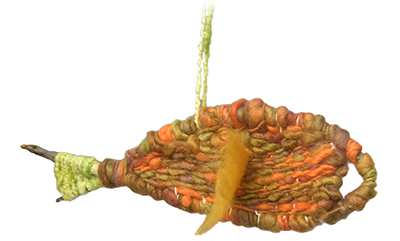
We had great fun making this fish at an experimental tapestry weaving workshop. You can use any flexible materials to weave, so exploring the craft doesn’t have to be expensive. For this project we used lengths of left over yarns and wool tops, the technique would work equally well with ribbons, laces, string or strips […]

10
Jun
Jun
Fibrecrafts Reeled Silk is the finest quality filament silk, containing 25% sericin and suitable for silk papermaking or couching. After degumming, the silk fibre can be dyed and spun to a lustrous yarn. The Silk Throwsters Waste, Carded Cocoon Strippings, Silk Carrier Rods and Cocoons all contain the naturally occuring sericin which is the glue […]