


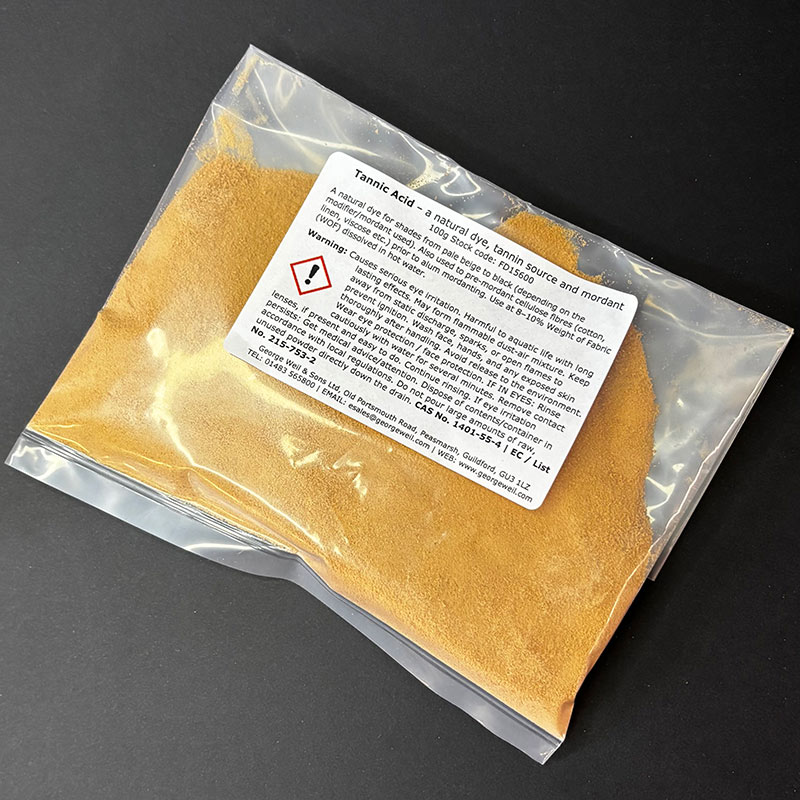
Tannic Acid is a plant-derived polyphenolic compound found in gallnuts, bark, leaves and other plant materials, particularly oak gallnuts. It is rich in tannins and is widely used in natural dyeing, especially as a pre-treatment for cellulose fibres such as cotton, linen and viscose.
When used before an aluminium mordant such as Alum, Tannic Acid helps prepare cellulose fibres for natural dyeing, improving their ability to take up and retain colour.
Tannic Acid can also be used to colour fibres in its own right, producing shades from pale beige to tan. After-treatments with different mordants can modify these colours: an Iron treatment can produce dark grey-brown shades, while Titanium Oxalate can bring out orange tones.
Tannic Acid is a versatile addition to the natural dyer’s toolkit, suitable for experimenting with both traditional mordanting techniques and a variety of natural colour effects.
 Important Natural Dyeing Tips - Mordants

Most natural fibres can be dyed using natural dyes. Some natural dyes can be used without a mordant, while others benefit from mordanting to improve colourfastness and help achieve particular shades.
Wool and silk are commonly mordanted with alum, while cellulose fibres such as cotton and linen should be mordanted using aluminium lactate. Another method is to prepare cellulose fibres with a tannin solution followed by an alum mordant. This age-old technique can sometimes affect the final colour of the natural dye through the colour absorbed during the tannin soak – a side effect that may be desirable.
Mordants are also used to modify colours using an after-treatment of iron, copper or tin mordant; these will each shift the original natural dye colour.
Whether you’re dyeing wool, silk, cotton or linen, natural dyes offer a wonderfully varied range of colours and effects, and many factors can affect the results. You can find answers to the following questions in our Blog post A Practical Guide to Natural Dyeing – How to Get the Best from Natural Dyes:
- Why do I need a mordant and how do mordants work?
- What is the method for mordanting protein fibres?
- What is the method for mordanting cellulose fibres?
- How much natural dye should I use?
- What colours will I get from my natural dyes?
- How do I modify or shift colours from natural dyes?


