


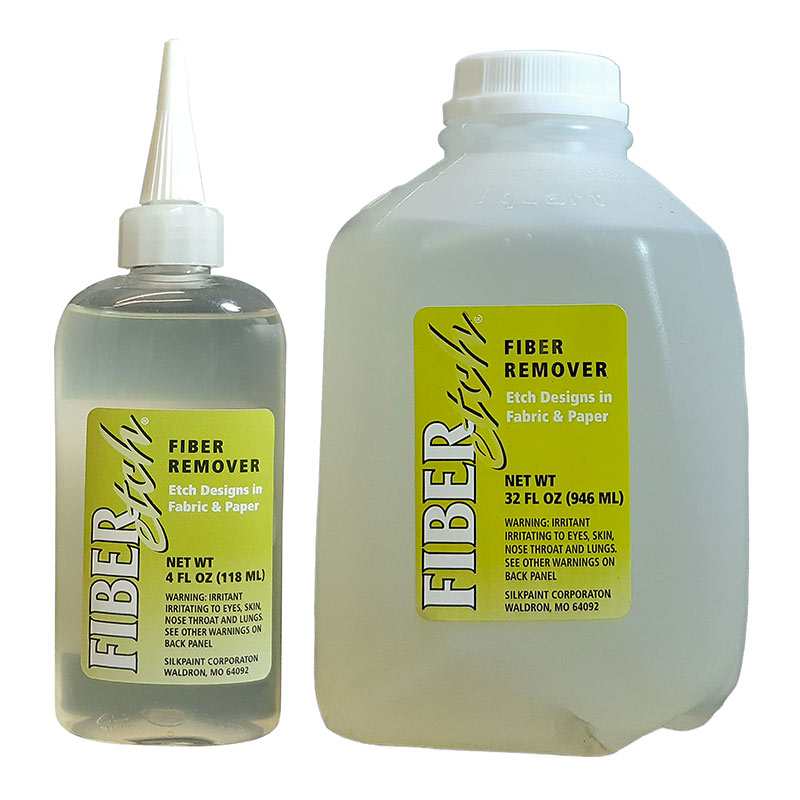



Fiber Etch Fibre Remover gel dissolves cellulose (e.g. cotton or viscose fibres). It can be used to devore velvet fabric, create burn out designs on mixed fibre blends, to aid cutwork or to “sculpt” designs on paper or wood.
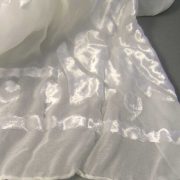
On silk velvet and satin, where the pile is made of viscose and the base net is silk (a protein), Fiber Etch will remove or sculpt the pile without dissolving the mesh to create a Devore fabric.
Fiber Etch can also be used to create burn out designs on T-shirts and other items made from mixed-fibre fabrics. The gel can be applied over a stencil through a screen printing frame or it can be stamped or painted onto the fabric. The gel will remove the cellulose (cotton) and expose the polyester threads. ALWAYS CHECK that polyester thread has been used to stitch the seams together before using Fiber Etch over the entire garment.
Using Fiber Etch with blended fabrics opens up exciting possibilities for decoration. Two different types of dye can be used to dye the fibres. Procion MX and Jacquard iDye for Natural Fabrics will readily dye the cellulose fibre but will not dye the polyester. Jacquard has developed iDye Poly for use on this synthetic fibre, and it can be used in the same dye pot as Jacquard iDye for Natural Fabrics. Choose two contrasting colours to enhance your design! This technique also applies to silk-based fabrics with cellulose pile. Acid dyes will colour the silk and Procion MX will colour the pile.
If Fiber Etch is to be used for cutwork (burning holes in 100% cellulose fabric), areas need to be edged with stitches using 100% polyester or silk thread.
Fiber Etch can also be used to create wood-burnt effects on wood and paper by sculpting into the surface. The method works best with fine-grained wood. Sand lightly and use a tack cloth or slightly damp cloth to remove any dust. Apply using a pipette and nib applicator or stamp. If working on porous wood or applying heavy lines of the gel, dry as you go with a hairdryer to prevent wicking. Allow to dry thoroughly and then activate with a heat tool in a well ventilated room. Colour will vary from light brown through to black depending on the amount of applied heat. Dip a damp cloth into baking soda to remove any Fiber Etch residue from the surface of the wood and wipe clean. Stain if desired.
Contains Sodium Bisulphite so avoid contact with skin and eyes.


